

Hiring a nanny is one of the most important investments a family can make. However, the hourly rate is only one part of the overall cost of employment. Understanding compensation
expectations, employer responsibilities, and additional expenses helps families develop a realistic budget and attract experienced childcare professionals.
How Much Does a Nanny Cost in 2026?
Nanny compensation varies depending on location, experience, schedule, and responsibilities.
For families seeking experienced, professional nannies in New York City, hourly compensation generally ranges from $30–$45+ per hour gross. Highly experienced nannies, including those with specialized qualifications or extensive experience supporting high-profile households, may command higher rates.
For a standard 40-hour workweek, this translates to approximately $62,400–$ 93,600+ annually in gross wages, before employer taxes, benefits, and additional expenses. Families needing extended schedules should also budget for overtime pay.
What Affects a Nanny’s Pay?
Location: Geographic location and the cost of living (COL) significantly influence compensation. Rates in major metropolitan areas such as New York City are generally higher than those in smaller cities or suburban communities. Beyond COL, working in NYC requires familiarity with public transportation, busy neighborhoods, local activities, and the organizational demands of managing the city with children.
Experience & qualifications: Nannies with extensive professional experience, strong references, and specialized qualifications typically command higher salaries, sometimes $40–$50 per hour or more. CPR and first-aid certification, early childhood education, newborn care training, and fluency in additional languages can influence compensation. NYC families particularly seek Mandarin, French, and Spanish speakers.
Number & ages of children: Caring for multiple children increases a nanny’s responsibilities. Depending on the position, families may increase compensation by about $2–$8 per hour gross for an additional child. The appropriate adjustment depends on the children’s ages, schedules, and level of care required. Positions involving infants or children who need specialized support may also warrant higher pay.
Schedule & flexibility: Full-time, part-time, evening, weekend, and travel-heavy positions have different compensation expectations. Overnight childcare and specialized newborn care can range from approximately $40–$80 per hour gross, depending on the professional’s experience and responsibilities. Extended newborn care arrangements may also use daily rates.
Live-in nannies may offer added convenience, but accommodations do not replace wages or eliminate applicable overtime obligations. Always form clear schedules and individual time.
Responsibilities: Childcare-focused responsibilities differ from positions that combine nanny duties with household management, family assistance, extensive cooking, or other household tasks. Families needing broader support should anticipate compensation that reflects the additional responsibilities.
Costs Beyond a Nanny’s Base Salary
When setting a childcare budget, families should account for several expenses beyond gross wages.
Gross vs. Net Pay
Negotiate nanny compensation in gross terms, meaning wages before employee tax deductions. Net pay is the amount the nanny takes home after taxes and other applicable deductions. Establishing gross compensation affords transparency for both parties.
Household Employer Taxes
Nannies are generally classified as household employees rather than independent contractors, meaning families have payroll tax and employment obligations.
For 2026:
- Social Security and Medicare (FICA): FICA generally applies when a household employee earns $3,000 or more in cash wages annually. Employers and employees each contribute 7.65% of applicable wages, subject to applicable limits and exemptions.
- Federal unemployment tax (FUTA): Generally applies when an employer pays $1,000 or more in household cash wages during any calendar quarter of the current or preceding year.
- Tax reporting: Household employment taxes are generally reported on Schedule H with the employer’s federal income tax return.
New York families must also consider applicable unemployment insurance, workers’ compensation, disability benefits, and paid leave requirements.
The Nanny Authority’s parent company, Pavillion Agency, offers household payroll services to help families navigate payroll administration and related responsibilities.
Paid Time Off & Benefits
Competitive nanny compensation packages often include paid vacation, holidays, and sick leave, with certain leave benefits required by law.
Additional benefits may include health insurance contributions, transportation assistance, discretionary bonuses, and annual compensation reviews. Offering a thoughtful benefits package can help families attract and retain qualified professionals.
Guaranteed Hours & Overtime
Many professional nannies expect guaranteed hours, meaning they receive their agreed-upon weekly compensation even when the family does not need childcare during scheduled hours.
Families should also understand applicable overtime requirements.
In New York State:
- Live-out nannies: receive overtime at 1.5 times their regular hourly rate after 40 hours worked per week.
- Live-in nannies: receive overtime at 1.5 times their regular hourly rate after 44 hours worked per week under New York State law.
** Live-in arrangements require additional consideration of federal rules, working hours, sleep periods, and personal time. A flat weekly salary does not eliminate applicable overtime obligations.
Additional Employment Expenses
Families should also budget for background checks, transportation, children’s activities, and other employment-related expenses.
The Nanny Authority assists with professional screening, reference verification, interview coordination, and comprehensive post-offer background checks.
Families should establish a clear process for covering activity admissions, transportation, meals, and other expenses incurred while caring for their children.
When planning long-term costs, families should also consider annual raises and potential compensation adjustments for additional children or expanded responsibilities.
What Should Families Budget Beyond Gross Salary?
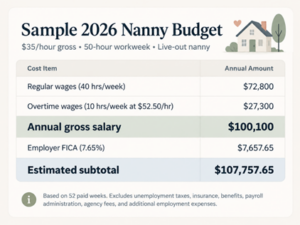
Beyond wages, families should set aside a separate budget for employer taxes, required insurance, payroll administration, benefits, and other employment-related expenses.
For example, a live-out nanny earning $35 per hour gross and working 50 hours weekly in New York City would earn:
Nanny Compensation vs. Agency Fees
Nanny compensation and agency placement fees are two separate expenses, and families should understand the distinction before beginning their search.
Nanny compensation refers to the wages paid directly to the nanny for ongoing employment. This is a recurring expense and should be processed in accordance with applicable household payroll regulations.
An agency placement fee is a separate expense paid to a professional placement agency for its recruitment and placement services. Depending on the agency, these services may include candidate sourcing, interviewing, reference verification, screening coordination, interview scheduling, and assistance throughout the offer process.
Agency fees do not replace or reduce a nanny’s compensation.
Families should review their agency’s fee agreement carefully to understand the services included, payment terms, and any applicable replacement policies.
How The Nanny Authority Helps Families Plan Their Budget
At The Nanny Authority, we know that every family has different childcare needs, schedules, expectations, and financial considerations.
Our experienced placement specialists work closely with families to build a realistic market understanding and identify qualified candidates whose experience and compensation expectations match their needs.
We assist families with:
- Defining schedules, responsibilities, and qualifications for the position
- Establishing competitive compensation expectations based on location and experience
- Recognizing the factors that influence total household employment costs
- Identifying and presenting qualified, professionally interviewed candidates
- Coordinating interviews, reference verification, and the hiring process
- Assisting with offer letters and laying out clear employment expectations
- Providing access to household payroll services through our parent company, Pavillion Agency
Hiring a nanny should be a thoughtful, informed process. With professional guidance, families can feel more confident in their budget while establishing a successful, long-term relationship with a qualified childcare professional.
Ready to begin your nanny search?
Contact The Nanny Authority today at (973) 466- 2669 or info@nannyauthority.com to discuss your family’s childcare needs, compensation expectations, and hiring timeline.